Showing posts with label sacramento. Show all posts

Friday, November 28, 2025

Running Journal - 2025-11-27 (Run to Feed the Hungry 2025)

Run to Feed the Hungry 2025 unofficial Finisher Certificate (accessed 11/28/2025)

Time:
 8:15-9:30 a.m. (75 minutes)
Resting heart rate (wake-up): 59 bpm
Weight (running clothes)
: N/A
Body Mass Index (BMI; note criticisms of BMI): N/A
Resting Metabolic Rate (RMR): N/A
Distance (running): 10.00 km (6.22 mi)
Cumulative distance (2024; ignores XT days): ?
Calories burned: 819 kcal
Average heart rate: 132 bpm
Max heart rate: 154 bpm
Weather at start: Overcast & slightly misty ☁️ 7° C (45° F), Humidity ?% Wind: calm km/h
Terrain: 46 ft elevation gain
Avg Pace:
 12'05" /mile
Best pace:
11'43" /mile
Stinkiness air level (0=No smell; 10=☣️): 0/10 (not stinky)
Comments: We ran the Run to Feed the Hungry 2025 10K race this year, in Sacramento, California ✅ Weather was cool and just barely misty. Once running it was OK. This was the 32nd annual race. Organizers held the inaugural race in 1994. 

Pre-race

Race cold-weather gear laid out the day before

Packing checklist: Gloves; Hoodie; Turkey hat; running pants; Socks; Shoes; Shorts; Shirt; Headband; Nipeaze; Body glide; Phone & charging cable; Watch & charging cable; Clif Bars

Room 417 view at noon on a misty Thanksgiving day: hotel parking & wall murals

We overnighted at AC Hotel Sacramento, by Marriott, room 417. The hotel opened in June 2025, and everything looked new. Checked-in via mobile app. Arrived, got key cards from the front desk, no problems, all handled professionally (if a bit cooly). The mobile app also supports phone-based room access. Parking was in an adjacent, underground garage. Turning was very tight and our car cameras helped negotiate without incident. Payment was $25 via QR code and good for in-and-out access for 24 hours. 

Packet pickup at 6:00 p.m. night before the race

This year we picked-up our packets the night before. Construction along Highway 50 still impacted by the Fix50 project. Due to congestion, missed getting into the rightmost lanes, so stuck on the left "express" lanes with a concrete barrier preventing me from exiting as I wished. Succeeded in exiting at the next exit, circled back after a few more turns, and made it to parking, which was plentiful. Pickup went smoothly, we collected our turkey gear: new gloves, a hat, & socks. 

Dinner this year was delivery from Chicago Fire pizza: a small Veggatouille Deep-dish, a personal thin-crust (tavern-style) pizza with kalamata olives & Italian beef, and a small Garlic Cheesy Bread. The deep-dish pizza was OK and the best of the order; the rest was mediocre. I had high hopes for the tavern-style pizza, but the crust tasted too "flour-y" to me. Not bad, but not the tavern-style I had hoped for. We were completely stuffed.

Race Day

Awoke at 6:00 a.m. for the 8:15 a.m. 10K race. Skipped showers. Shared a cup of hotel-room coffee via the in-room coffee maker. It was fine. The hotel claimed to have breakfast, but we didn't see anything other than the restaurant as we stepped off the elevators. Instead we got our car and headed to Temple Coffee, ordered coffees, a vegetable scone, and a pumpkin-chocolate loaf. All was excellent. 

Temple Coffee, Sacramento, Thanksgiving Day 2025, 7:05 a.m.

Weather was cool and slightly misty. We saw our breath at times (mid-40's F), but layered clothing, hat, gloves kept the chill away. The drive to Sac State on U.S. 50 was uncrowded. Parked in surface Lot C at the opposite side of campus with everyone else. The walk to the start was not crowded.

Giant inflatable turkey near the starting line

The giant inflated turkey was in the same spot as 2024. For people who signed-up as a member of a team, a special surface-lot area was reserved and had hot beverages & other perks. A photographer asked Dawn's permission to take her photo, which she granted.

10K runners had the option of timed & untimed bibs. We had chosen timed so had gated access to a spot closer to the starting line. 

Amplifiers played standards like Sweet Caroline by Neil Diamond. A quad-copter drone hovered above us, recording. 

Starting line for 10K runners at 7:51 a.m., outside the timed-bib area
 

The timed area was slow to fill up, which gave us a few minutes to relax. Announcers on an American-flag decorated scissor-lift said a few words, followed by an unnecessarily religious but thankfully short invocation by a priest. We listened to a decent performance of the American anthem, then the countdown began, and we were off.

We crossed the start after about 40 seconds. We had decided to run without walk breaks for the first 1-2 miles, depending on how we felt. This went pretty well. A few days earlier, we had run 8 miles without incident. The 10K race was much less crowded than the 5K start, which was congested with no way to run freely. Spectators turned out and cheered us on. In the Fab 40's, a number of spectators had small gatherings on their lawns next to propane heaters or fire pits. The fall foliage was very colorful. Live bands performed. It was moderately crowded the entire race. 

Mimosa stations--we must have passed at least six tables offering free booze to runners đŸč 😅

Musicians this year covered a variety of songs. One covered The Race is On, another covered a song by The Cure on their ukulele. A handful of the Sacramento Philharmonic brass section appeared early on. An electric guitar & drum kit duo endlessly played several bars of AC/DC's Back in Black.

Pumpkin pie friendship bracelet

Toward the end, Dawn accepted a friendship bracelet spelling the words "Pumpkin Pie" from a woman spectator handing them out.

Refreshment area snacks & water

As we crossed the finish line, we both felt tired but pretty good. We walked to the refreshment area, where they had Krispy Kreme glazed donuts (I had 2), bananas, small oranges, Nature's Valley Crunchy Granola bars, and waters. We took a few photos near the giant inflatable turkey, then headed back across CSUS campus to our car.


Any irregular feelings, aches, pains, heart rate, and so forth?: None
Foods eaten today:  

Thursday, November 28, 2024

Running Journal - 2024-11-28 (Run to Feed the Hungry 2024)

Run to Feed the Hungry 2024 unofficial Finisher Certificate (accessed 12/01/2024)

Time:
9:00-9:35 a.m. (35 minutes)
Resting heart rate (wake-up): 47 bpm
Weight (running clothes)
: N/A
Body Mass Index (BMI; note criticisms of BMI): N/A
Resting Metabolic Rate (RMR): N/A
Distance (running): 5.10 km (3.17 mi)
Cumulative distance (2024; ignores XT days): 1,514.52 km (941.08 mi)
Calories burned: 418 kcal
Average heart rate: 134 bpm
Max heart rate: 157 bpm
Weather at start: Sunny ☀️ 8° C (46.4° F), Humidity 76% Wind: 7 km/h
Terrain: 30 ft elevation gain
Avg Pace:
11'13" /mile
Best pace:
11'13" /mile
Stinkiness air level (0=No smell; 10=☣️): 0/10 (not stinky)
Comments: We ran the Run to Feed the Hungry 2024 5K race this year, in Sacramento, California ✅ Weather was cold ❄️ Once running it was OK. This was the 31st annual race. Organizers held the inaugural race in 1994. 

Pre-race

Race cold-weather gear laid out the day before

Packing checklist: Ear buds & charging case; Wallet; Keys; Socks; Shoes; Shorts; Shirt; Headband; Heart rate monitor; Nipeaze; Body glide; Sunblock; Laptop & bag; Phone & charging cable; Watch & charging cable; Clif bars.

Hot tub, stained-glass window, and fireplace - The Inn & Spa at Parkside Happiness Loft

We splurged and stayed two nights at The Inn & Spa at Parkside, Sacramento, in the Happiness Loft: "Inhabiting the third floor attic space of the Historic Fong Mansion, this loft-style room is delightfully spacious and features a king bed, spa bath, and two fireplaces." This was a place we had noticed with interest years ago. Unfortunately, we never had the opportunity (or budget) for it. Our Thanksgiving holiday stay was pleasant and quiet. Due to the holiday, we only interacted with staff via text messaging. We accessed the hotel front door & room via keypad codes. On Wednesday, we arrived from out-of-town well after the front desk closed at 7:00 p.m. Staff had Thursday off per Thanksgiving. On Friday, we left before staff arrived, so we might have an early breakfast with a friend. The building was mostly empty. On Wednesday night, we heard a few people watching TV and talking in their rooms as we passed by in the hallway. On Thursday (Thanksgiving) the hotel seemed quieter; it was unclear if we were completely alone. We initially planned to stay one night, but hotel staff offered us a 2nd night stay at a 25% discount 🙂 The mansion seems clean and in good repair, with lots of wood and carpeted stairs. The bottom floor has a parlor, a small bar, and a small dining area. A keypad-secured wine cabinet allows guests to purchase reds or whites through 8:00 p.m. A nearby Ring camera seems to represent the way the night innkeeper may provide wine cabinet keypad codes after 7:00 p.m., when the office closes. The fall foliage was perfect. 🍁🍂 The Happiness Loft was accessed via a wooden spiral staircase behind a 2nd-floor door. This door has a chain door fastener for added security. It was a tight fit hauling luggage up the spiral stairs. Per the sharply-angled loft ceilings, we adjusted to bending and ducking as we moved. I remember thinking: if I was a kid--i.e., half my height--I would have loved this. The loft had two SimpliFire fireplaces: 1) By the bed; and 2) By the hot tub. A remote control let us choose the fireplace flame color (blue) and ember bed color (purple). The hot tub also had a button to cycle through LED colors. The water was relaxing despite its weak jets, even on high. Its faucet dispensed water quickly, and got scalding hot. The walk-in shower had a square copper rainfall shower head. Above the hot tub was a very large semi-circle stained-glass window in lavender and blue. Lavender bath salts were provided. The room had a pod coffee maker with complimentary coffee, tea, and hot chocolate. It had a microwave, mini fridge, and safe. The bed area has 10 large semi-opaque LED ceiling panels in lieu of windows. A wall-mounted control by the staircase allows for various ceiling panel lighting options. We settled on a softly transitioning color scheme. We did not use the TV.

We purchased Clif Bars from Target on Wednesday night just in case we got hungry on Thanksgiving night and did not have leftovers. While at Target, we also purchased gloves & a thicker outer layer for the cold weather in the morning. For dinner we ordered-in from nearby Petra Greek restaurant.

Race Day

Awoke around 6:30 a.m. for our 9:00 a.m. race. Skipped showers. Wiped off condensation from the car windows. Weather was cold enough to see our breath (high 30's-low 40's F). The drive to Sac State on U.S. 50 was uncrowded. Enjoyed the easy access from the hotel to the nearby on-ramp. At the off-ramp to Sac State we encountered some traffic delays as drivers queued at stop lights. Once they turned green, traffic flowed quickly. We parked in the surface lots, then followed others through campus to the start. It was cold despite our layers. đŸ„¶ The 10K race had started at 8:15 a.m., and we arrived at the starting line slightly after that. 

People pose by the giant inflatable turkey near the starting line

There was a giant inflated turkey, starting corrals, police, and volunteers with large "Ask me" signs. There was a homemade larger-than-life shopping cart with an engine on the bottom shelf. For people who signed-up as a member of a team, a special surface-lot area was reserved and had hot beverages & other perks.

Packet pickup at 8:16 a.m. in local gymnasium (1 block from starting line)

Packet pickup was in a church gymnasium about a block from the start. When we arrived around 8:15 a.m., the line was so short we walked through the lobby doors and into the gym, with only had one or two turns in the roped line. We collected our bibs from a friendly woman with a tablet computer who scanned our QR code and wrote down our details on the timed bibs. We proceeded to pickup our shirts, turkey hat, and turkey tutu add-ons from the other tables. My shirt was XL, so I brought it to the shirt exchange and was successful in getting a large shirt. As we exited, we noticed the line outside had grown enormously, now snaking outside the exterior doors and to the street. 

Pre-race selfie


Starting line for timed 5K runners at 8:46 a.m., near the 12-minute/mile sign

We walked to the starting corrals and made our way through the crowd, then past the metal barricade to the 12-minute/mile sign. Volunteers stand at the metal barricades to only allow timed runners through. The timed area was slow to fill up, which gave us a few minutes to relax. A news helicopter circled above. Announcers on an American-flag decorated scissor-lift directed us to wave at the helicopter. Various VIPs briefly talked, interspersed with amplified music. We stood for the American anthem, then the countdown began, and we were off.

It took us about a minute to reach the starting line. I don't have a strong memory of the first mile, but Dawn and I ran around lots of people. There was no way to run freely. However, running was pleasant. Spectators turned out and cheered us on. As we wound our way through the Fabulous 40's, one racer remarked that the rich people had come out to cheer on "the poor's" (i.e., us). A number of spectators had small gatherings on their lawns next to propane heaters or fire pits. Around the halfway point, at a water break, my Garmin watch paused as we stopped. I pressed the right-side button to resume, but I'm not sure what happened, and it stopped, so I pressed it again, and it turned green again. This was a bit odd, but later in Strava I noticed the run was only recorded as distance = 1.85 miles (Garmin was OK)đŸ€” We resumed and went at a comfortable pace. The fall foliage was very colorful. Live bands performed. It was crowded the entire race. 

As we crossed the finish line, we both felt tired but pretty good. We walked to the refreshment area, where they had Krispy Kreme glazed donuts, bananas, oranges, Nature's Valley Crunchy Granola bars, and waters. We took a few photos near the giant inflatable turkey, then headed back across CSUS campus to our car.

Post-race snacks & swag

2nd-floor nook - The Inn & Spa at Parkside Happiness Loft

Any irregular feelings, aches, pains, heart rate, and so forth?: None
Foods eaten today: Keurig pod coffee maker - Starbucks Pike Place Roast (8 oz), Clif Bar - Chocolate Brownie,

Monday, May 20, 2019

Chando's Cantina Art

Walked past Chando's Cantina and admire the art by Raul Mejia:
This wall at Chando’s was created because of all the things being said against Mexicans in politics. It was necessary to create this, not for myself or the Mexican people per se, but for the youth. They need to know there’s still people fighting for them.
https://www.newsreview.com/sacramento/art-at-the-intersection/content?oid=26197130

From his Instagram, it's called the Mexican Legends mural (left to right):

  1. Juan Gabriel, born Alberto Aguilera Valadez (1950–2016) 
  2. RocĂ­o DĂșrcal, born MarĂ­a de los Ángeles de las Heras Ortiz (1944–2006)
  3. Joan Sebastian (1951–2015)
  4. Dolores del RĂ­o (1904–1983)
  5. Chespirito, born Roberto GĂłmez Bolaños, in character as El Chavo del Ocho (1929–2014)
Many thanks to Raul for personally stepping in and naming #1, #2, and #4, above. : ) 


  1. Frida Kahlo, born Magdalena Carmen Frida Kahlo y CalderĂłn (1907–1954) (note: not visible)
  2. Selena Quintanilla-PĂ©rez (1971–1995) (note: partially obscured)
  3. Carlos Santana (1947–) (note: not visible)
  4. Tin-Tan, born GermĂĄn Genaro Cipriano GĂłmez ValdĂ©s de Castillo (1915–1973)
  5. MarĂ­a FĂ©lix (1914–2002)
  6. Capulina, born Gaspar Henaine PĂ©rez (1926–2011)
  7. Cantinflas, known casually as Mario Moreno; born Mario Fortino Alfonso Moreno Reyes (1911–1993)

Sunday, May 01, 2016

Noh Masks, at California State University, Sacramento University Library Gallery

The California State University, Sacramento University Library Gallery currently features an exhibit, "Traditions Transfigured Noh Masks of Bidou Yamaguchi", February 11, 2016 - May 21, 2016.

http://www.al.csus.edu/sota/ulg/

"The human face and its expressive potential have inspired artists around the world for millennia. Arguably, Japan’s Noh theater provides an unparalleled domain for exploring emotion and representing the human countenance. Today, Noh continues to inspire a dynamic dialogue between artists from Asia and the west. Expanding on this rich vein, Traditions Transfigured features contemporary works by Bidou Yamaguchi (b. 1970, Fukuoka, Japan). These masks apply the forms, techniques, transformative spirit, and mysterious elegance of Noh masks to iconic female portraits from the European art historical canon, and to Kabuki actor prints by Sharaku, Japan’s enigmatic 18th century portrait master. 
Like a human face, the work of Bidou Yamaguchi opens itself to many angles of interpretation. The product of a Noh mask carver who also creates modern sculpture in the form of masks, Bidou’s art speaks to issues such as cultural identity, gender, portraiture, performance, representation, and appropriation, as well as the roles of beauty and craft in contemporary art. 
Our fundamental premise is that Bidou’s art is informed by the world of Noh, and, in turn, offers insight into this diversely creative realm of theater and image making. We stress the productive links between Bidou’s roles as a “traditional” artisan who works to reproduce old masks and a contemporary artist who makes new objects. We treat these fresh creations as “masks,” although they were not commissioned for use in Noh plays. In fact, the oblique orientation of the eyes in most of these portraits differentiates them from Noh masks. Despite these differences, our approach imagines these works as potential characters in future dramas. 
In the world of Noh, Bidou’s work challenges the conventions of Noh masks and, by extension, might stimulate new types of Noh plays. More expansively, Bidou’s art suggests ways of deploying the aesthetic strategies and ontological assumptions of Noh. This is not simply another strategy for “modernizing within tradition” in Japan, or a new manifestation of Japanese cultural uniqueness with universal application. Bidou’s work is not aimed at any totalizing theory about contemporary art practice, and certainly the artist has produced no manifesto to such an end. 
Instead, his art seems focused on a particular task. Bidou’s masks are a kind of intercession on behalf of half-human, half-artistic spirits. His works are transfigurations that bring about reincarnations into a transformed body (keshin) that is the true body (hontai) for figures like Lisa Gherardini who have become so well known as images (the Mona Lisa) that they all but cease to exist as humans. This act is analogous to the procedure of intercession or recuperation in the texts of Noh plays. However, unlike Noh plays, where this literary rebirth recuperates the socially unacceptable acts and desires of women and other marginalized figures, Bidou gives a new body—literally, a face with the potential of speaking—to persons who have been turned into “ghosts” by mechanical reproduction, popular appropriation, and, perhaps, a deeper unwillingness to comprehend the humanity of people removed from us in time and place. 
Bidou’s art constructs a three-dimensional face for these rhetorical ghosts, and thus brings about an altered understanding of these persons who have become so familiar as images they are almost invisible as the vestiges of souls. Although his art is rooted in a Buddhist worldview, it resonates with the Christian idea of transfiguration as a change in form or appearance that parallels a spiritual change, and it signals the exultant moment when the human meets the divine so that the temporal becomes the eternal. 
By transfiguring both European and Japanese artistic traditions, Bidou Yamaguchi’s work merges past and present. More importantly, it allows contemporary audiences to uncover deeper dimensions of their own humanity. By imagining ourselves wearing different faces, we can forge deeper spiritual connections with each other. 
Kendall H. Brown, PhD
Guest Curator

Sunday, July 10, 2011

2011 7th Annual Japanese Film Festival of Sacramento

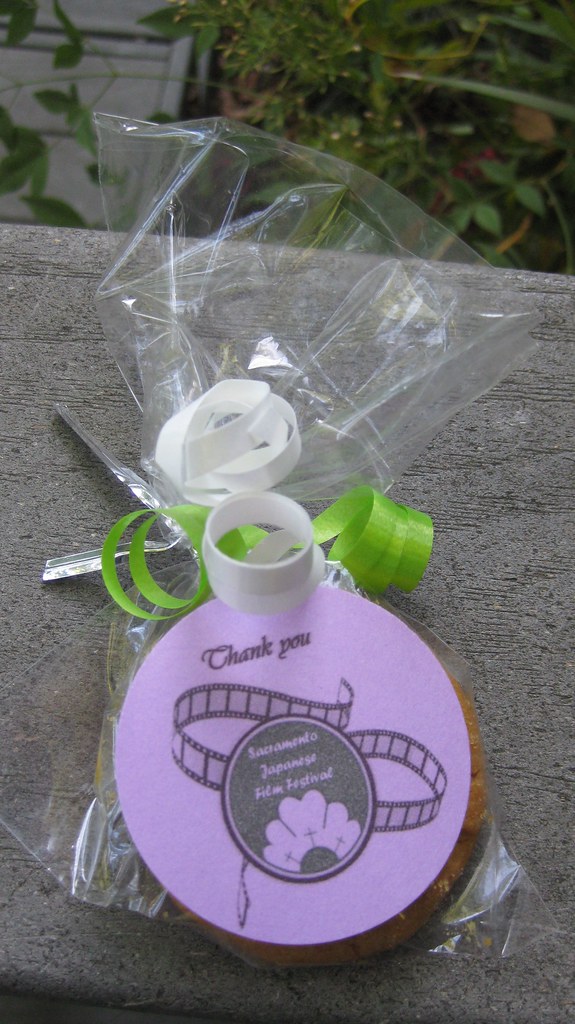
Shortbread cookie provided with peasant tea during intermission of "Seven Samurai"

Dawn and I attended the 7th annual Japanese Film Festival of Sacramento this weekend. This year, the committee selected the following films (descriptions from the festival guide):

  • ‎"Dear Doctor" (2009; Trailer (in Japanese)):

    "Winner of two Japan Academy Awards for Best Screenwriter/Best Supporting Actress. A doctor faithfully serves 1,500 residents in a Japanese Mountain Village. Dr. Ino is humble and selfless and he makes house calls. The villagers think he is a saint. The doctor is actually a fake, would be physician. The story is about a decent man who is caught in a web of his own lies and wants out. The reaction of the villagers when they learn the truth is acid comedy. Film maker Miwa Nishikawa's movie asks what counts in life and how well do we know each other?"

  • "Still Walking" (2008; Trailer):

    "Two adult children return to visit their parents in a family reunion. Family tensions and old hurts contrast with the peaceful setting in a beautiful seaside town. Grandfather Kyobei hides behind his newspaper at the family table. Grandmother Toshiko is cute as she bustles around the kitchen throwing insults saying, "I'm not being cruel, it's normal." Second son, Ryo can't live up to his parents' memory of his dead brother. Brilliantly acted, Director Hirokazu Kore' eda's 7th film has parallels with Ozu's Tokyo Story."

  • "Tokyo Godfathers" (2003; anime; Trailer):

    "It's Christmas Eve in Tokyo. An alcoholic, Gin, an aging drag queen, Hana, and a teenage girl, Miyuki, are unlikely friends who are homeless. They discover an abandoned baby girl in a trash barrel. In their odyssey of learning how to care for a baby, they learn about themselves. The film pays loving tribute to the Tokyo's snowy winter beauty. Director Satoshi Kon's animated film is one of the rare movies which use anime to tell a story of human suffering, love, and redemption which is too painful to be realized in live action."

  • "The Harimaya Bridge" (2009; Trailer):

    "American Daniel Holder goes to Japan to bring back his late son's art work. He dislikes the Japanese because his own father died in a Japanese prisoner of war camp during WWII. While wrestling with his personal demons in Japan he finds peace within himself. Producer Danny Glover has a supporting role in the movie which is in English with Japanese subtitles and in Japanese with English subtitles. African American film writer and director, Aaron Woolfolk was a junior high school English teacher in rural Japan. Beautifully shot scenes are Japanese in spirit and technique and reveal Woolfolk's love for that country."

  • "One Big Hapa Family" (2010; Trailer):

    "Documentary with live action and anime. Yonsei Japanese Canadian Jeff Chiba Stearns uses his anime art to explore four generations of intermarriage in the Koga family. The story of the Canadian Issei, Nisei, Sansei, and Yonsei generations is told through interviews, archival photos, historical film footage, home movies, and animation. Issues of racism, integration, and the instinct to retain the Japanese Culture and language are expressed with a freshness, wonderful sense of humor and open heart. In his journey of self-discovery, documentarian Stearns also explores the reasons why over 98% of Japanese Canadians have intermarried."

  • "Seven Samurai" (1954; Trailer):

    "Akira Kurosawa's great film inspired the next 50 years of international film making. The story is simple and clear. Farmers in a small village approach seven ronin samurai to teach them how to fight bandits who will rob their barley crop. The samurai agree for daily rice and lodging. Seven Samurai is anchored in Japan's feudal values of caste and social hierarchy. Kurosawa also argues for individual worth and humanism through Seven Samurai's misfits and renegade heroes. The battle scene of sweeping tides of men moving from a higher to lower plane has been called one of the glories of world cinema. There is deeper meaning in this movie by one of the greatest film makers at the height of his powers. The samurais win the battle but it is the villagers who are the winners."

My favorites, in order, excluding Seven Samurai, starting with my most favorite:

  • ‎"Still Walking": What happens when familial expectations fall apart? An annual family reunion strains and strengthens social ties. The movie sensuously highlights Japanese food preparation, summer heat, childhood friendships and adult dysfunctions. By turns both cruel and kind, the family's matriarch and patriarch find their attempts at control over their childrens' lives frustrated--or do they impact them more than their children let on? Rich landscapes of Yokosuka, Kanagawa, Japan inspire. This was my favorite movie, showing limits of control and our ability to forgive and accept our own loved ones.

  • "Dear Doctor" (2009): A quack in a remote Japanese mountain village finds his practice challenged by unexpected developments. Everyone suspect--and accepts. The town has never had it so good; or has it? Another lushly-filmed movie in high summer, the greens and the mountains dazzle. A study in contrasts between institutional and rural doctor-patient relationships, ShĂŽfukutei hits all the right notes.

  • "Tokyo Godfathers" (2003; anime): In the cool dark of the theater, I felt the fall of snow watching this film. Set at Christmas, three homeless companions make a discovery which will change their lives forever. Winter is pitch-perfect, even if some scenes and plot resolutions stretch credibility.

  • "The Harimaya Bridge" (2009): This movie had moments of greatness (for example, the Shinto shrine marriage). Bennet Guillory comes across as a caricature of Americans abroad. Misa Shimizu shines, as do Saki Takaoka and actress Misono. Cinematography in Kochi Prefecture is amazing. A great debut film by Oakland, CA-native Aaron Woolfolk.

  • "One Big Hapa Family" (2010): A short (50-minute) documentary of growing up Japanese-Canadian, by Jeffrey Chiba-Stearns. I actually liked this a lot, but could not rank it higher than a feature film and all its attendant challenges. Chiba-Stearns talks in detail, showing several provocative historical photos about the Canadian Japanese internment camps and how World War 2 triggered mass assimilation of Japanese-Canadians. Informative, entertaining, and moving--and this was my lowest ranked screening! :o)

Festival Notes

  • Gave my ticket to Seven Samurai to a friend who had never seen it; I watched it in 2010. Just an epic film.

  • Overall, another great festival year.
     
  • The crowed seemed bigger this year--we missed out on getting a goodie bag on opening night, as we arrived just before showtime and they had ran out. So--no list of goodie bag items, this year.

  • The goodie bags did look the same as last year, however (small #3 brown paper shopping bag), with rice crackers, coupons, organic seeds, and so forth.

  • Noticable lack of political sponsorship (again) this year. Where are you, Doris Matsui?

  • On Thursday, we attended a rare screening of Kenji Mizoguchi's film "Osaka Elegy" (1936), a companion piece to his film "Sisters of the Gion" (1936), which they screened in 2010.

  • Coincidentally, the Sacramento Trash Film Orgy (http://trashfilmorgy.com/) kicked off their summer schedule this evening with a Zombie Walk, so as we exited the theater, we encountered zombies wandering about for the midnight showing of "Return of the Living Dead" :o)

  • First year I remember raffles--one before The Harimaya Bridge and one before Seven Samurai

  • Another first--peasant tea and cookies during the intermission of Seven Samurai.

  • Hats off to the staff of the Crest Theater--all class.

  • Tables in the lobby: books for sale, cards for sale, donations for Japan relief fund, donations for the Sacramento Japanese United Methodist Church, and so forth.

  • Not sure why, but this year I did not feel as moved by any of the films. :o| Distracted by so many other things going on in my life, presently, I guess.

Links to Previous Years


Friday, March 25, 2011

MacArthur's Children (1984 Movie) -- "A significant and rare film"


The Sacramento Japanese Film Festival and the Jan Ken Po Cultural Association presented this "significant and rare film" for the free Spring 2011 film screening. As we did last year, Dawn and I attended and enjoyed the opportunity.

From Wikipedia:

"MacArthur's Children (ç€Źæˆžć†…ć°‘ćčŽé‡Žçƒć›Ł Setouchi Shƍnen YakyĆ«-dan) is a popular and influential 1984 Japanese motion picture. Describing the impact of the United States' occupation of Japan from the perspective of the inhabitants of a small, rural island community, the film featured the big screen debut of actor Ken Watanabe."

and from the IMDB:

"Starring Masako Natsume, Shima Iwashita, and Hiromi Go. Mac Arthur’s Children begins with Emperor Hirohito’s radio speech announcing Japan’s defeat. The Japanese face profound change and the American occupation. The movie is seen through the eyes of two boys in Awaji, a small fishing village on Japan’s Inland Sea. Young men return as wounded soldiers; lives are shattered; there are would be Yakuzas. There is also Glen Miller and American baseball. Director Masahiro Shinoda’s film is a rare gem which tells the story with compassion and humor. (1984, 120 minutes, color). PG"

Notes

  • Ken Watanabe made his film debut, playing the role of Tetsuo
  • While the advertising mailer implied the movie is rare, one new and six used VHS cassettes are available on Amazon.
  • "MacArthur's Children was written and directed by two of those titular children, Takeshi Tamura (writer) and Masahiro Shinoda (director); the film was adapted from the Japanese best-seller by Yu Aku." (via)
  • The Japanese title literally translates (roughly) to "The Inland Sea Schoolboys' Baseball Team"
  • An interview with director Masahiro Shinoda.
  • I looked for a link to the source novel, written by now deceased author YĆ« Aku (阿äč… æ‚ , Aku YĆ«), but without success
  • The movie was held in the main church hall, this year
  • Subtitles were white and difficult to read, sometimes
  • The VHS player ate the film, once or twice
  • Afterward, Dawn and I relaxed and helped ourselves to a wide variety of snacks, including fresh fruit, hot tea, rice crackers and a homemade mochi-blueberry bar, which tasted delicious
  • Met Sam and his wife June
  • Did not get a chance to go outside and see their beautiful garden, this year
  • Overall, a well-organized event and a tribute to the hard work and dedicated volunteers who put on the Sacramento Japanese Film Festival

Monday, July 12, 2010

2010 6th Annual Japanese Film Festival of Sacramento


Additional goody-bag printed scalloped paper medallions (affixed to chocolate mint candies)

We attended the 6th Sacramento Japanese Film Festival at the Crest Theater this Friday, Saturday, and Sunday. The films this year (descriptions from the festival guide):
  • Departures (2008)

    "Daigo Kobayashi (Masahiro Motoki) is a young cellist in a small Tokyo orchestra that goes belly up. Unemployed, he sells his precious 18 million yen cello, and returns to live in his boyhood home which is inherited from his mother. Thinking it’s for a travel agency, Daigo answers a want ad “Working with Departures.” The ad is for “an encoffiner” or funeral worker who cleans and grooms bodies for burial in front of the deceased’s family. The pay is very good but the job, called “nokanshi” is not respected. Daigo takes the job and doesn’t tell his wife, Mika (Ryoko Hirosue). At first, he is sickened by the process. He learns that the ceremony which is done with grace and skill, gives dignity to the dead and comfort to the bereaved. A young girl gets her mother’s favorite lipstick to use, and a grieving husband tells Daigo that his wife “has never looked so beautiful.” Through his wise and kind boss, Sasaki (Tsutomu Yamasaki), who can enjoy a huge meal afterwards, Daigo begins to feel what Roger Egbert calls, “a deep and unsensational acceptance that the Japanese have of death.” Director Yojiro Takita’s use of flashbacks show Daigo’s relationship with the father who abandoned him and make the younger man’s self discovery and forgiveness of that parent believable. The film’s humorous episodes offer a relief from the exploring of bonds between the departed and those of us who are still engaged with the process of living. Departures is a wise, funny, and poignantly absorbing movie."

  • K-20: Legend of the Mask (2008)

    "A big action, super hero adventure movie that rewrites history. World War II never happened because Japan and the U.S. negotiated peace. Tokyo is called Teito. It is 1949, the nobility rule, and society is divided into the haves and have nots. A phantom thief K-20 has 20 disguises which enable him to steal priceless art and jewels. K-20 also wants the Tesla Transmitter, a wireless energy device, which can reduce Teito to ashes and conquer the world. K-20 frames the hero, a poor circus acrobat, Heikichi (Takeshi Kaneshiro), to take the rap and go to jail as the captured K-20. Heikichi’s prison pals spring him from jail, and Heikichi makes use of his acrobatic skills to climb buildings, soar from bridges and wage war against K-20 to clear his name and bring down K-20. The final showdown will keep viewers riveted to their seats."

  • Throne of Blood (1957)

    "Akira Kurosawa created a cinematic masterpiece in Throne of Blood by blending Shakespeare’s MacBeth plot with Japanese Noh Theater. Noh drama uses masks, symbols, dance and music, and Kurosawa puts these elements in the film. The saga begins when two warriors, Washizu (Toshiro Mifune) and Miki (Minoru Chiaki) lose their way in a forest during a raging storm. They meet an old hag who prophesizes military victories. Washizu’s ambitious, power hungry wife, Asaji (Isuzu Yamada) pushes her husband to ruthlessly kill his rivals. Washizu’s bloodstained rule creates opposition and his destruction fulfills the old woman’s prophecy. The character Lady Asaji is unforgettable. Her immobile face is like a Noh Mask; and she gracefully glides across the screen in Noh’s stylized manner. Lord Washizu’s inevitable end surrounded by phalanx of arrows is one of the great moments of cinema."

  • White on Rice (2009)

    "Jimmy (Hiroshi Watanabe) is a clueless 40-year old from Japan who relocates to Salt Lake City to live with his married sister, Aiko (Nae). He wants a new wife because his supply of frozen cooked meals from his ex has run out. White On Rice’s non-stop laughs come from Jimmy’s social denseness at work, at home, and with women. Aiko’s husband, Tak (Mio Takada) wants Jimmy to go away and his marriage to be what it once was. Nephew Bobby (Justin Kwong) and Jimmy are room mates and the boy has more on the ball than the Uncle. Bobby is the entrepreneur who mows lawns and washes cars for pay and the gifted kid who is bored in class. Jimmy mentors Bobby saying, “… after puberty you will be as tall as the girls!” Director-writer Dave Boyle loves his characters and infuses White On Rice with the guilelessness and the warmth of spirit reminiscent of Laurel and Hardy and Jacques Tati’s Mr. Hulot."

  • Memories of Matsuko (2006)

    "Matusko’s nephew, Sho, arrives to clean out his aunt’s apartment. Matsuko (Miki Nakatani) has been discovered murdered in a field. Sho (Eito) pieces together the life of a woman he never knew through a neighbor, former lover, and loyal friend- a punk rocker, a yakusa, and a successful porn star. Memories of Matsuko is funny, tragic, scary, joyous, and uplifting. Through flashbacks covering 40 years, Matsuko’s life is relived through painfully realistic scenes, Japanese rap, and Hollywood, Bob Fosse style musical extravaganzas. School teacher, to call girl, to gangster’s moll, and prison inmate, Matsuko is a woman who looked for love with the wrong men in all the wrong places. Scenes of domestic abuse and prison life are blended with Disney singing birds, hip hop prison songs, and Christian hymns. Sho concludes that life becomes worthwhile when we give. Matsuko gave throughout her life until the end; therefore her life was successful. Memories of Matsuko is a tremendously innovative cinematic accomplishment with deeper meanings, outstanding musical sequences, and over the top cinematography. Miki Nakatani won the 2007 Best Actress Award from the Japanese Academy Awards, the Asian Film Awards, the Mainichi Film Concours, and the Kinema Junpo Awards. Memories of Matsuko has sexual and violent scenes."
My favorites, in order, starting with my most favorite:
  1. Departures

    Wow; just wow. Yƍjirƍ Takita knocked it out of the park with this one. Highly recommended, A++, would buy again.

  2. Throne of Blood

    A classic adaptation of Shakespeare's Macbeth. Toshirƍ Mifune is just a giant of an actor (see, also, Seven Samurai, Rashomon). Isuzu Yamada is his equal as wife Asaji. Downsides: Tedious at times; did we really need five minutes of Washizu and Miki riding horses through the fog? Highly recommended.

  3. Memories of Matsuko

    Violence. Dysfunction. Debasement. Pain. Loneliness. Abandonment. A few rays of happiness shine through the thunderclouds in Matsuko's first few decades of life. Instead of breaking, the storm subsides into unending scuddy gray winter skies that eventually break her. A tragedy, for sure. Or is it? Did I mention it is a musical? Memories of Matsuko takes Julie Andrews' Maria Ranier character from The Sound of Music and puts her into a noir pachinko game/meat-grinder, challenging the viewer to remain indifferent. The religious message of "salvation through works" seems tacked-on and unsatisfying. Overall, a monster of a film with catchy songs and an incredible performance from Miki Nakatani, who won a well-deserved 2007 Japanese Academy Award for Best Actress.

  4. K-20: The Legend of the Mask

    Great action sequences and special effects, with about as much plot and dialogue as one might expect from a blockbuster action film. This film never really gets us to care about the characters, but who cares? Things blow up, there is a giant Tesla machine threatening to turn the world to ash, and lots of acrobatics and action keep the pace moving. This is Bud Light, not micro-brew, if you will, and sometimes that is just fine on a hot summer night.

  5. White on Rice

    Hiroshi Watanabe puts in a fine performance as Jimmy, a recently divorced, 40-year-old man-child who gets by on the increasingly tenuous patience of his sister Aiko's family. Jimmy starts and ends the movie in pre-pubescence, his comedic naiveté the only interruption in his host family's life of boredom and monotony. Eventually, Jimmy's obsessive attraction to Aiko's niece goes too far, and it starts the predictable PG-rated road-to-redemption story. By movie's-end, Jimmy magically ends up with an attractive, got-it-together girl ready to follow him anywhere as attendant. Funny moments exist: after Aiko's husband slips and falls on a knife, the hospital ER doc thinks he attempted to commit seppuku, causing Aiko to burst into fits of giggles. The film dips just enough into creepy stalker territory with Jimmy to make the audience catch its breath. Then things get better. Overall, a well-executed film, with mostly believable characters (save Jimmy and Bob, Aiko's 10-year-old wunderkind son).
Festival Notes
  • Just made the connection Isuzu Yamada (Asaji, from Throne of Blood) was the woman who played the role of Omocha in the movie The Sisters of the Gion, which Dawn and I saw earlier this spring. Ms. Yamada is still alive at the age of 93. Amazing.

  • Noticable lack of political sponsorship this year. Where are you, Doris Matsui?

  • The event staff are so friendly. All class.

  • We sat in better seats this year and saved our necks. In previous years, we sat in the lower section.

  • The festival broke up the five movies this year over three days. Instead of an opening night film and four films on Saturday, there was an opening night film and two films each day on Saturday and Sunday. I think this worked out well.

  • The festival was moved from mid-May to mid-July this year, due to scheduling problems at the Crest Theater. I think this worked out better for students. We missed the fourth annual festival because of school pressures. I hope this continues in 2011.

  • The vendor tables at this year's event featured origami paper cranes and cards, which were pretty cool.

  • Speakers announced the festival pulls in only 40% of its funds from ticket sales. The remainder comes from private and corporate donors.

  • Corporate donors this year did not surpass the Silver Screen Circle ($250 - $499) of sponsorship. Times are tough all-around, it seems.

  • A number of volunteers from the Sacramento Japanese United Methodist Church donated big bucks to underwrite the Saturday and Sunday films. I think they were the ones introducing the films on stage. They are the people really keeping this festival alive, so hats off to you!
Overall, another great festival year. Thanks so much to the Festival committee for making it happen.

Links to Previous Years

Saturday, July 10, 2010

2010 6th Annual Japanese Film Festival of Sacramento Opening Night Goody Bags


The 6th Annual Japanese Film Festival of Sacramento once again provided goodie bags on opening night:
The 2010 goodie bag was a small #3 brown paper shopping bag (for example, http://www.zoolybag.com/kraft-bags.html) with a paper twisted handle and a 3"x3" sticker on the front with promotional images for each of the five films.

Goody bag contents from opening nights of years past:

Monday, October 19, 2009

Duck Confit

Somehow in about two weeks I have to learn how to make duck confit.

Necessity is the mother of invention.

What I have learned so far:
  1. Frozen duck is expensive; fresh duck is probably more expensive.

  2. Several local poultry locations in Sacramento may carry duck; the downtown farmer's market may also carry duck meat. Or the Asian markets. Raley's and Wholefoods carry frozen duck.

  3. It takes rendered duck fat to make duck confit. A lot of rendered duck fat; about one pound of fat per cup of rendered fat. Good to know! Rendered duck fat is expensive to buy; about $10 per half-pound. :P Unrendered duck fat runs about $10 for 5 lbs.

  4. I will probably want to have on-hand: metal strainer; candy/deep-fry thermometer; covered baking dish

  5. It will take time to make: (1) 36 hours to salt cure the meat; (2) anywhere from 1.5-7 hours to bake; (3) curing time in the fat; (4) reheating time prior to serving.
Looking like too much for me to bite off right now; the rendered duck fat is too much. Maybe a roast duck instead, and reserve the duck fat for another occasion.

UPDATE: This person may have saved the day:

http://www.youtube.com/watch?v=fwpwqtmKcgc
http://www.youtube.com/watch?v=714ifZ-Kgnw

Not traditional by any means (not cured; not poached in rendered duck fat; not cured in fat); but for I bet it approaches the quality of duck confit without quite the cost and ingredient sourcing involved with the rendered duck fat.

UPDATE:
  • The Sacramento Farmer's Market sells "Beef, Pork, Chicken, Fish. No duck or lamb."

  • Corti Brothers sells frozen duck for $5/lb. They sell rendered duck fat, 7 ounces for $8.50

  • New American Poultry sells frozen duck legs and breasts for $3/lb. They sell frozen ducks for $2/lb. They do not sell rendered duck fat.

Saturday, July 05, 2008

2008 Sacramento Japanese Film Festival

We missed the 2008 Sacramento Japanese Film Festival event due to pressure from finals week.

The list of movies screened that I hope to view at home in the future:
  1. Always – Sunset on Third Street
  2. Hot Summer Winds
  3. The Slanted Screen
  4. Rashomon
We both enjoyed the 2007 Sacramento Japanese Film Festival event

Article in the Sacramento Bee: http://www.sacbee.com/121/story/939671.html

Blog Archive