Showing posts with label festival. Show all posts

Saturday, April 29, 2023

39th Annual Cupertino Cherry Blossom Festival (2023-04-29)

bao by andrea - Cupertino Cherry Blossom Festival, Memorial Park, 4/29-4/30 2023


Arrived around noon. Parked at De Anza lot for free. Petted a few Shiba Inu dogs and admired a number of Akita dogs.

Purchased a few food items:

  • 1 x Combo 5 pieces regular takoyaki and 5 pieces kimchi takoyaki (Takoyaki Yamachan)
  • 1 x Spam musubi (Boy Scouts Troop 87)
  • 1 x Coffee Milk Tea w/honey boba, and 1 x Amor Classic Milk Tea with honey boba and Strawberry Popping Boba (Amor Cafe and Tea)
Vendors:

Sunday, April 16, 2023

56th Northern California Cherry Blossom Festival (2023-04-16, San Francisco)

Parked near Larkin & Sutter. Crostini & Java for breakfast: French Lavender Latte, 16-ounce black House coffee, and avocado toast (whole wheat, avocado, honey vinaigrette). Wind was a bit brisk and cool enough I decided to bring my wool gloves, but it warmed up enough to not need them. Mostly clear blue skies--a beautiful day.

Watched the Grand Parade of the 56th annual Northern California Cherry Blossom Festival in San Francisco from in front of The Carlisle at 1450 Post Street. 

Young students from the Rosa Parks Elementary School Japanese Bilingual Bicultural Program (JBBP) played and waited with chaperones. Later, they joined the parade when the older students passed.

The Daihatsu HiJet Fire Engine (also known as Kiri the Japanese Fire Truck, aka teenytinyfiretruck) played music and drove past us. We heard the "San Francisco Godzilla Alert" The alert: "This is San Francisco self-defense fire brigade. There have been confirmed Godzilla sightings in the city. For your safey and the safety of others, please leave Godzilla alone. Thank you 🦖" (note: it is preceded by electronic tones and the same message in Japanese).

Other notable parade participants:

  • Scouts carrying large and small Daruma doll floats (looked like papier-mâché)--they spun and tilted them successfully
  • Shiba Inu Fanciers of Northern California (SFNC)
  • Cosplay
  • Musicians (varied)
  • Swordsmanship demonstrations
After what looked like the final float, we walked to Webster Street for event food. A few vendors had sold out, so we failed to get another bag of Sakura popcorn from the Rosa Parks Elementary School vendor stall. It was very crowded. While waiting by the beer tent, San Francisco Taru Mikoshi Ren carried their Mikoshi, or portable Shinto shrine, past us. 🌟 

The parade ended, event staff hastily re-opened the streets and attendees thronged the vendors. Unlike the previous weekend, it was very competitive to find food options. We managed to get a complimentary Pocari Sweat. 

Escaped the crush of people onto Sutter Avenue and re-entered the festival on Buchanan Street. Unlike previous years, no vendor stalls in place (same as last weekend). 

Finding food options on Buchanan Street and the Japan Center mall no less crowded, we decided to make an early exit and head home.  

Sunday, April 09, 2023

56th Northern California Cherry Blossom Festival (2023, San Francisco)

We arrived a bit past noon. Watched taiko drumming on the main stage. Bought a purple 2023 festival tee shirt. Ate street vendor fare: "soko"-yaki (takoyaki style balls but with beef instead of octopus); imagawayaki pastry; spam musubi; Sakura popcorn; and Sapporo sake.

Purchased a few bags of goods:
  • Nippon-Ya: Harajuku mochi chocolate, seasonal strawberry Ichigo mochi, cherry flavored mochi Sakura dango, and green tea sponge cake
  • Daikoku by Shiki: Replacement bowl and plate
  • Misaky Tokyo vendor table: Sakura flower crystal sweet treat Japanese delicacy (seaweed but tastes like chewy rock candy 🤩)
  • Kinokuniya San Francisco: book "The Art of the Wind Rises" by Hayao Miyazaki, and a GUND Pusheen Breakfast Surprise Plush Series #19, 3” (we got "Cereal")
Also bought Injeolmi Croissant, iced matcha latte, and iced yuja tea from Jina Bakes Bakery Cafe. While eating the injeolmi croissant, I laughed and blew roasted soy bean powder all over us 🙃 Thankfully Dawn was relatively nonplussed.

Walked upstairs to NEW PEOPLE 2nd floor late in the day. The 1st floor was still a tea shop but the store at the landing was shuttered. 


This weekend, the vendor stalls we usually saw next to Soko Hardware were missing. This was the first year we visited on the first weekend of festivities, so maybe next weekend more will appear (?) 

While transitioning, we watched the 2023 Queen and Court procession as they posed for a photo with a sponsor of the event. 

The Daihatsu HiJet Fire Engine (also known as Kiri the Japanese Fire Truck, aka teenytinyfiretruck) played music and drove past us while we ate our spam musubi and imagawayaki. 😎 🚒 🎵

Overall a pleasant event day!

Vendors we liked:

Sunday, July 10, 2011

2011 7th Annual Japanese Film Festival of Sacramento

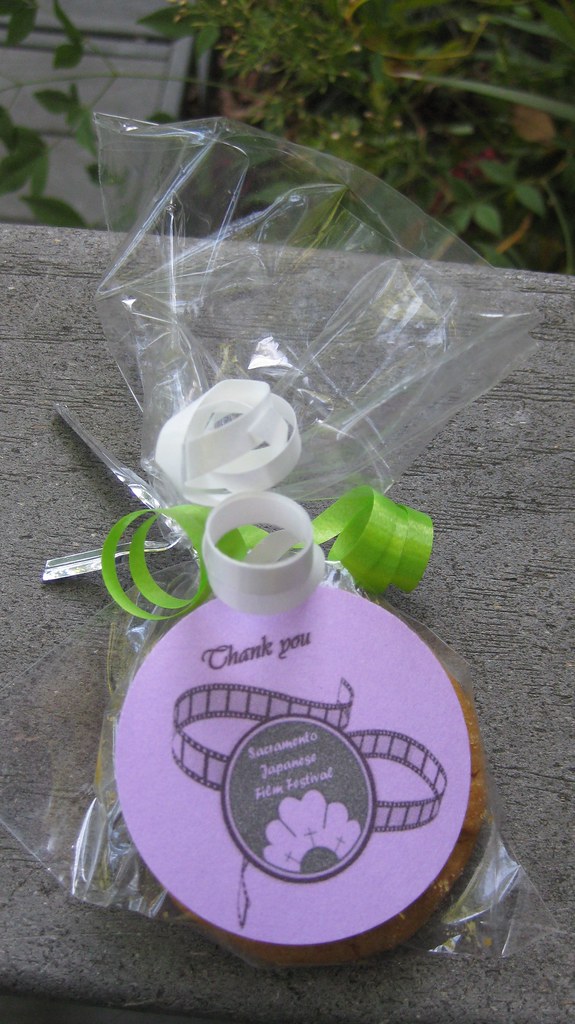
Shortbread cookie provided with peasant tea during intermission of "Seven Samurai"

Dawn and I attended the 7th annual Japanese Film Festival of Sacramento this weekend. This year, the committee selected the following films (descriptions from the festival guide):

  • ‎"Dear Doctor" (2009; Trailer (in Japanese)):

    "Winner of two Japan Academy Awards for Best Screenwriter/Best Supporting Actress. A doctor faithfully serves 1,500 residents in a Japanese Mountain Village. Dr. Ino is humble and selfless and he makes house calls. The villagers think he is a saint. The doctor is actually a fake, would be physician. The story is about a decent man who is caught in a web of his own lies and wants out. The reaction of the villagers when they learn the truth is acid comedy. Film maker Miwa Nishikawa's movie asks what counts in life and how well do we know each other?"

  • "Still Walking" (2008; Trailer):

    "Two adult children return to visit their parents in a family reunion. Family tensions and old hurts contrast with the peaceful setting in a beautiful seaside town. Grandfather Kyobei hides behind his newspaper at the family table. Grandmother Toshiko is cute as she bustles around the kitchen throwing insults saying, "I'm not being cruel, it's normal." Second son, Ryo can't live up to his parents' memory of his dead brother. Brilliantly acted, Director Hirokazu Kore' eda's 7th film has parallels with Ozu's Tokyo Story."

  • "Tokyo Godfathers" (2003; anime; Trailer):

    "It's Christmas Eve in Tokyo. An alcoholic, Gin, an aging drag queen, Hana, and a teenage girl, Miyuki, are unlikely friends who are homeless. They discover an abandoned baby girl in a trash barrel. In their odyssey of learning how to care for a baby, they learn about themselves. The film pays loving tribute to the Tokyo's snowy winter beauty. Director Satoshi Kon's animated film is one of the rare movies which use anime to tell a story of human suffering, love, and redemption which is too painful to be realized in live action."

  • "The Harimaya Bridge" (2009; Trailer):

    "American Daniel Holder goes to Japan to bring back his late son's art work. He dislikes the Japanese because his own father died in a Japanese prisoner of war camp during WWII. While wrestling with his personal demons in Japan he finds peace within himself. Producer Danny Glover has a supporting role in the movie which is in English with Japanese subtitles and in Japanese with English subtitles. African American film writer and director, Aaron Woolfolk was a junior high school English teacher in rural Japan. Beautifully shot scenes are Japanese in spirit and technique and reveal Woolfolk's love for that country."

  • "One Big Hapa Family" (2010; Trailer):

    "Documentary with live action and anime. Yonsei Japanese Canadian Jeff Chiba Stearns uses his anime art to explore four generations of intermarriage in the Koga family. The story of the Canadian Issei, Nisei, Sansei, and Yonsei generations is told through interviews, archival photos, historical film footage, home movies, and animation. Issues of racism, integration, and the instinct to retain the Japanese Culture and language are expressed with a freshness, wonderful sense of humor and open heart. In his journey of self-discovery, documentarian Stearns also explores the reasons why over 98% of Japanese Canadians have intermarried."

  • "Seven Samurai" (1954; Trailer):

    "Akira Kurosawa's great film inspired the next 50 years of international film making. The story is simple and clear. Farmers in a small village approach seven ronin samurai to teach them how to fight bandits who will rob their barley crop. The samurai agree for daily rice and lodging. Seven Samurai is anchored in Japan's feudal values of caste and social hierarchy. Kurosawa also argues for individual worth and humanism through Seven Samurai's misfits and renegade heroes. The battle scene of sweeping tides of men moving from a higher to lower plane has been called one of the glories of world cinema. There is deeper meaning in this movie by one of the greatest film makers at the height of his powers. The samurais win the battle but it is the villagers who are the winners."

My favorites, in order, excluding Seven Samurai, starting with my most favorite:

  • ‎"Still Walking": What happens when familial expectations fall apart? An annual family reunion strains and strengthens social ties. The movie sensuously highlights Japanese food preparation, summer heat, childhood friendships and adult dysfunctions. By turns both cruel and kind, the family's matriarch and patriarch find their attempts at control over their childrens' lives frustrated--or do they impact them more than their children let on? Rich landscapes of Yokosuka, Kanagawa, Japan inspire. This was my favorite movie, showing limits of control and our ability to forgive and accept our own loved ones.

  • "Dear Doctor" (2009): A quack in a remote Japanese mountain village finds his practice challenged by unexpected developments. Everyone suspect--and accepts. The town has never had it so good; or has it? Another lushly-filmed movie in high summer, the greens and the mountains dazzle. A study in contrasts between institutional and rural doctor-patient relationships, Shôfukutei hits all the right notes.

  • "Tokyo Godfathers" (2003; anime): In the cool dark of the theater, I felt the fall of snow watching this film. Set at Christmas, three homeless companions make a discovery which will change their lives forever. Winter is pitch-perfect, even if some scenes and plot resolutions stretch credibility.

  • "The Harimaya Bridge" (2009): This movie had moments of greatness (for example, the Shinto shrine marriage). Bennet Guillory comes across as a caricature of Americans abroad. Misa Shimizu shines, as do Saki Takaoka and actress Misono. Cinematography in Kochi Prefecture is amazing. A great debut film by Oakland, CA-native Aaron Woolfolk.

  • "One Big Hapa Family" (2010): A short (50-minute) documentary of growing up Japanese-Canadian, by Jeffrey Chiba-Stearns. I actually liked this a lot, but could not rank it higher than a feature film and all its attendant challenges. Chiba-Stearns talks in detail, showing several provocative historical photos about the Canadian Japanese internment camps and how World War 2 triggered mass assimilation of Japanese-Canadians. Informative, entertaining, and moving--and this was my lowest ranked screening! :o)

Festival Notes

  • Gave my ticket to Seven Samurai to a friend who had never seen it; I watched it in 2010. Just an epic film.

  • Overall, another great festival year.
     
  • The crowed seemed bigger this year--we missed out on getting a goodie bag on opening night, as we arrived just before showtime and they had ran out. So--no list of goodie bag items, this year.

  • The goodie bags did look the same as last year, however (small #3 brown paper shopping bag), with rice crackers, coupons, organic seeds, and so forth.

  • Noticable lack of political sponsorship (again) this year. Where are you, Doris Matsui?

  • On Thursday, we attended a rare screening of Kenji Mizoguchi's film "Osaka Elegy" (1936), a companion piece to his film "Sisters of the Gion" (1936), which they screened in 2010.

  • Coincidentally, the Sacramento Trash Film Orgy (http://trashfilmorgy.com/) kicked off their summer schedule this evening with a Zombie Walk, so as we exited the theater, we encountered zombies wandering about for the midnight showing of "Return of the Living Dead" :o)

  • First year I remember raffles--one before The Harimaya Bridge and one before Seven Samurai

  • Another first--peasant tea and cookies during the intermission of Seven Samurai.

  • Hats off to the staff of the Crest Theater--all class.

  • Tables in the lobby: books for sale, cards for sale, donations for Japan relief fund, donations for the Sacramento Japanese United Methodist Church, and so forth.

  • Not sure why, but this year I did not feel as moved by any of the films. :o| Distracted by so many other things going on in my life, presently, I guess.

Links to Previous Years


Friday, March 25, 2011

MacArthur's Children (1984 Movie) -- "A significant and rare film"


The Sacramento Japanese Film Festival and the Jan Ken Po Cultural Association presented this "significant and rare film" for the free Spring 2011 film screening. As we did last year, Dawn and I attended and enjoyed the opportunity.

From Wikipedia:

"MacArthur's Children (瀬戸内少年野球団 Setouchi Shōnen Yakyū-dan) is a popular and influential 1984 Japanese motion picture. Describing the impact of the United States' occupation of Japan from the perspective of the inhabitants of a small, rural island community, the film featured the big screen debut of actor Ken Watanabe."

and from the IMDB:

"Starring Masako Natsume, Shima Iwashita, and Hiromi Go. Mac Arthur’s Children begins with Emperor Hirohito’s radio speech announcing Japan’s defeat. The Japanese face profound change and the American occupation. The movie is seen through the eyes of two boys in Awaji, a small fishing village on Japan’s Inland Sea. Young men return as wounded soldiers; lives are shattered; there are would be Yakuzas. There is also Glen Miller and American baseball. Director Masahiro Shinoda’s film is a rare gem which tells the story with compassion and humor. (1984, 120 minutes, color). PG"

Notes

  • Ken Watanabe made his film debut, playing the role of Tetsuo
  • While the advertising mailer implied the movie is rare, one new and six used VHS cassettes are available on Amazon.
  • "MacArthur's Children was written and directed by two of those titular children, Takeshi Tamura (writer) and Masahiro Shinoda (director); the film was adapted from the Japanese best-seller by Yu Aku." (via)
  • The Japanese title literally translates (roughly) to "The Inland Sea Schoolboys' Baseball Team"
  • An interview with director Masahiro Shinoda.
  • I looked for a link to the source novel, written by now deceased author Yū Aku (阿久 悠, Aku Yū), but without success
  • The movie was held in the main church hall, this year
  • Subtitles were white and difficult to read, sometimes
  • The VHS player ate the film, once or twice
  • Afterward, Dawn and I relaxed and helped ourselves to a wide variety of snacks, including fresh fruit, hot tea, rice crackers and a homemade mochi-blueberry bar, which tasted delicious
  • Met Sam and his wife June
  • Did not get a chance to go outside and see their beautiful garden, this year
  • Overall, a well-organized event and a tribute to the hard work and dedicated volunteers who put on the Sacramento Japanese Film Festival

Monday, July 12, 2010

2010 6th Annual Japanese Film Festival of Sacramento


Additional goody-bag printed scalloped paper medallions (affixed to chocolate mint candies)

We attended the 6th Sacramento Japanese Film Festival at the Crest Theater this Friday, Saturday, and Sunday. The films this year (descriptions from the festival guide):
  • Departures (2008)

    "Daigo Kobayashi (Masahiro Motoki) is a young cellist in a small Tokyo orchestra that goes belly up. Unemployed, he sells his precious 18 million yen cello, and returns to live in his boyhood home which is inherited from his mother. Thinking it’s for a travel agency, Daigo answers a want ad “Working with Departures.” The ad is for “an encoffiner” or funeral worker who cleans and grooms bodies for burial in front of the deceased’s family. The pay is very good but the job, called “nokanshi” is not respected. Daigo takes the job and doesn’t tell his wife, Mika (Ryoko Hirosue). At first, he is sickened by the process. He learns that the ceremony which is done with grace and skill, gives dignity to the dead and comfort to the bereaved. A young girl gets her mother’s favorite lipstick to use, and a grieving husband tells Daigo that his wife “has never looked so beautiful.” Through his wise and kind boss, Sasaki (Tsutomu Yamasaki), who can enjoy a huge meal afterwards, Daigo begins to feel what Roger Egbert calls, “a deep and unsensational acceptance that the Japanese have of death.” Director Yojiro Takita’s use of flashbacks show Daigo’s relationship with the father who abandoned him and make the younger man’s self discovery and forgiveness of that parent believable. The film’s humorous episodes offer a relief from the exploring of bonds between the departed and those of us who are still engaged with the process of living. Departures is a wise, funny, and poignantly absorbing movie."

  • K-20: Legend of the Mask (2008)

    "A big action, super hero adventure movie that rewrites history. World War II never happened because Japan and the U.S. negotiated peace. Tokyo is called Teito. It is 1949, the nobility rule, and society is divided into the haves and have nots. A phantom thief K-20 has 20 disguises which enable him to steal priceless art and jewels. K-20 also wants the Tesla Transmitter, a wireless energy device, which can reduce Teito to ashes and conquer the world. K-20 frames the hero, a poor circus acrobat, Heikichi (Takeshi Kaneshiro), to take the rap and go to jail as the captured K-20. Heikichi’s prison pals spring him from jail, and Heikichi makes use of his acrobatic skills to climb buildings, soar from bridges and wage war against K-20 to clear his name and bring down K-20. The final showdown will keep viewers riveted to their seats."

  • Throne of Blood (1957)

    "Akira Kurosawa created a cinematic masterpiece in Throne of Blood by blending Shakespeare’s MacBeth plot with Japanese Noh Theater. Noh drama uses masks, symbols, dance and music, and Kurosawa puts these elements in the film. The saga begins when two warriors, Washizu (Toshiro Mifune) and Miki (Minoru Chiaki) lose their way in a forest during a raging storm. They meet an old hag who prophesizes military victories. Washizu’s ambitious, power hungry wife, Asaji (Isuzu Yamada) pushes her husband to ruthlessly kill his rivals. Washizu’s bloodstained rule creates opposition and his destruction fulfills the old woman’s prophecy. The character Lady Asaji is unforgettable. Her immobile face is like a Noh Mask; and she gracefully glides across the screen in Noh’s stylized manner. Lord Washizu’s inevitable end surrounded by phalanx of arrows is one of the great moments of cinema."

  • White on Rice (2009)

    "Jimmy (Hiroshi Watanabe) is a clueless 40-year old from Japan who relocates to Salt Lake City to live with his married sister, Aiko (Nae). He wants a new wife because his supply of frozen cooked meals from his ex has run out. White On Rice’s non-stop laughs come from Jimmy’s social denseness at work, at home, and with women. Aiko’s husband, Tak (Mio Takada) wants Jimmy to go away and his marriage to be what it once was. Nephew Bobby (Justin Kwong) and Jimmy are room mates and the boy has more on the ball than the Uncle. Bobby is the entrepreneur who mows lawns and washes cars for pay and the gifted kid who is bored in class. Jimmy mentors Bobby saying, “… after puberty you will be as tall as the girls!” Director-writer Dave Boyle loves his characters and infuses White On Rice with the guilelessness and the warmth of spirit reminiscent of Laurel and Hardy and Jacques Tati’s Mr. Hulot."

  • Memories of Matsuko (2006)

    "Matusko’s nephew, Sho, arrives to clean out his aunt’s apartment. Matsuko (Miki Nakatani) has been discovered murdered in a field. Sho (Eito) pieces together the life of a woman he never knew through a neighbor, former lover, and loyal friend- a punk rocker, a yakusa, and a successful porn star. Memories of Matsuko is funny, tragic, scary, joyous, and uplifting. Through flashbacks covering 40 years, Matsuko’s life is relived through painfully realistic scenes, Japanese rap, and Hollywood, Bob Fosse style musical extravaganzas. School teacher, to call girl, to gangster’s moll, and prison inmate, Matsuko is a woman who looked for love with the wrong men in all the wrong places. Scenes of domestic abuse and prison life are blended with Disney singing birds, hip hop prison songs, and Christian hymns. Sho concludes that life becomes worthwhile when we give. Matsuko gave throughout her life until the end; therefore her life was successful. Memories of Matsuko is a tremendously innovative cinematic accomplishment with deeper meanings, outstanding musical sequences, and over the top cinematography. Miki Nakatani won the 2007 Best Actress Award from the Japanese Academy Awards, the Asian Film Awards, the Mainichi Film Concours, and the Kinema Junpo Awards. Memories of Matsuko has sexual and violent scenes."
My favorites, in order, starting with my most favorite:
  1. Departures

    Wow; just wow. Yōjirō Takita knocked it out of the park with this one. Highly recommended, A++, would buy again.

  2. Throne of Blood

    A classic adaptation of Shakespeare's Macbeth. Toshirō Mifune is just a giant of an actor (see, also, Seven Samurai, Rashomon). Isuzu Yamada is his equal as wife Asaji. Downsides: Tedious at times; did we really need five minutes of Washizu and Miki riding horses through the fog? Highly recommended.

  3. Memories of Matsuko

    Violence. Dysfunction. Debasement. Pain. Loneliness. Abandonment. A few rays of happiness shine through the thunderclouds in Matsuko's first few decades of life. Instead of breaking, the storm subsides into unending scuddy gray winter skies that eventually break her. A tragedy, for sure. Or is it? Did I mention it is a musical? Memories of Matsuko takes Julie Andrews' Maria Ranier character from The Sound of Music and puts her into a noir pachinko game/meat-grinder, challenging the viewer to remain indifferent. The religious message of "salvation through works" seems tacked-on and unsatisfying. Overall, a monster of a film with catchy songs and an incredible performance from Miki Nakatani, who won a well-deserved 2007 Japanese Academy Award for Best Actress.

  4. K-20: The Legend of the Mask

    Great action sequences and special effects, with about as much plot and dialogue as one might expect from a blockbuster action film. This film never really gets us to care about the characters, but who cares? Things blow up, there is a giant Tesla machine threatening to turn the world to ash, and lots of acrobatics and action keep the pace moving. This is Bud Light, not micro-brew, if you will, and sometimes that is just fine on a hot summer night.

  5. White on Rice

    Hiroshi Watanabe puts in a fine performance as Jimmy, a recently divorced, 40-year-old man-child who gets by on the increasingly tenuous patience of his sister Aiko's family. Jimmy starts and ends the movie in pre-pubescence, his comedic naiveté the only interruption in his host family's life of boredom and monotony. Eventually, Jimmy's obsessive attraction to Aiko's niece goes too far, and it starts the predictable PG-rated road-to-redemption story. By movie's-end, Jimmy magically ends up with an attractive, got-it-together girl ready to follow him anywhere as attendant. Funny moments exist: after Aiko's husband slips and falls on a knife, the hospital ER doc thinks he attempted to commit seppuku, causing Aiko to burst into fits of giggles. The film dips just enough into creepy stalker territory with Jimmy to make the audience catch its breath. Then things get better. Overall, a well-executed film, with mostly believable characters (save Jimmy and Bob, Aiko's 10-year-old wunderkind son).
Festival Notes
  • Just made the connection Isuzu Yamada (Asaji, from Throne of Blood) was the woman who played the role of Omocha in the movie The Sisters of the Gion, which Dawn and I saw earlier this spring. Ms. Yamada is still alive at the age of 93. Amazing.

  • Noticable lack of political sponsorship this year. Where are you, Doris Matsui?

  • The event staff are so friendly. All class.

  • We sat in better seats this year and saved our necks. In previous years, we sat in the lower section.

  • The festival broke up the five movies this year over three days. Instead of an opening night film and four films on Saturday, there was an opening night film and two films each day on Saturday and Sunday. I think this worked out well.

  • The festival was moved from mid-May to mid-July this year, due to scheduling problems at the Crest Theater. I think this worked out better for students. We missed the fourth annual festival because of school pressures. I hope this continues in 2011.

  • The vendor tables at this year's event featured origami paper cranes and cards, which were pretty cool.

  • Speakers announced the festival pulls in only 40% of its funds from ticket sales. The remainder comes from private and corporate donors.

  • Corporate donors this year did not surpass the Silver Screen Circle ($250 - $499) of sponsorship. Times are tough all-around, it seems.

  • A number of volunteers from the Sacramento Japanese United Methodist Church donated big bucks to underwrite the Saturday and Sunday films. I think they were the ones introducing the films on stage. They are the people really keeping this festival alive, so hats off to you!
Overall, another great festival year. Thanks so much to the Festival committee for making it happen.

Links to Previous Years

Saturday, July 10, 2010

2010 6th Annual Japanese Film Festival of Sacramento Opening Night Goody Bags


The 6th Annual Japanese Film Festival of Sacramento once again provided goodie bags on opening night:
The 2010 goodie bag was a small #3 brown paper shopping bag (for example, http://www.zoolybag.com/kraft-bags.html) with a paper twisted handle and a 3"x3" sticker on the front with promotional images for each of the five films.

Goody bag contents from opening nights of years past:

Saturday, July 05, 2008

2008 Sacramento Japanese Film Festival

We missed the 2008 Sacramento Japanese Film Festival event due to pressure from finals week.

The list of movies screened that I hope to view at home in the future:
  1. Always – Sunset on Third Street
  2. Hot Summer Winds
  3. The Slanted Screen
  4. Rashomon
We both enjoyed the 2007 Sacramento Japanese Film Festival event

Article in the Sacramento Bee: http://www.sacbee.com/121/story/939671.html

Blog Archive